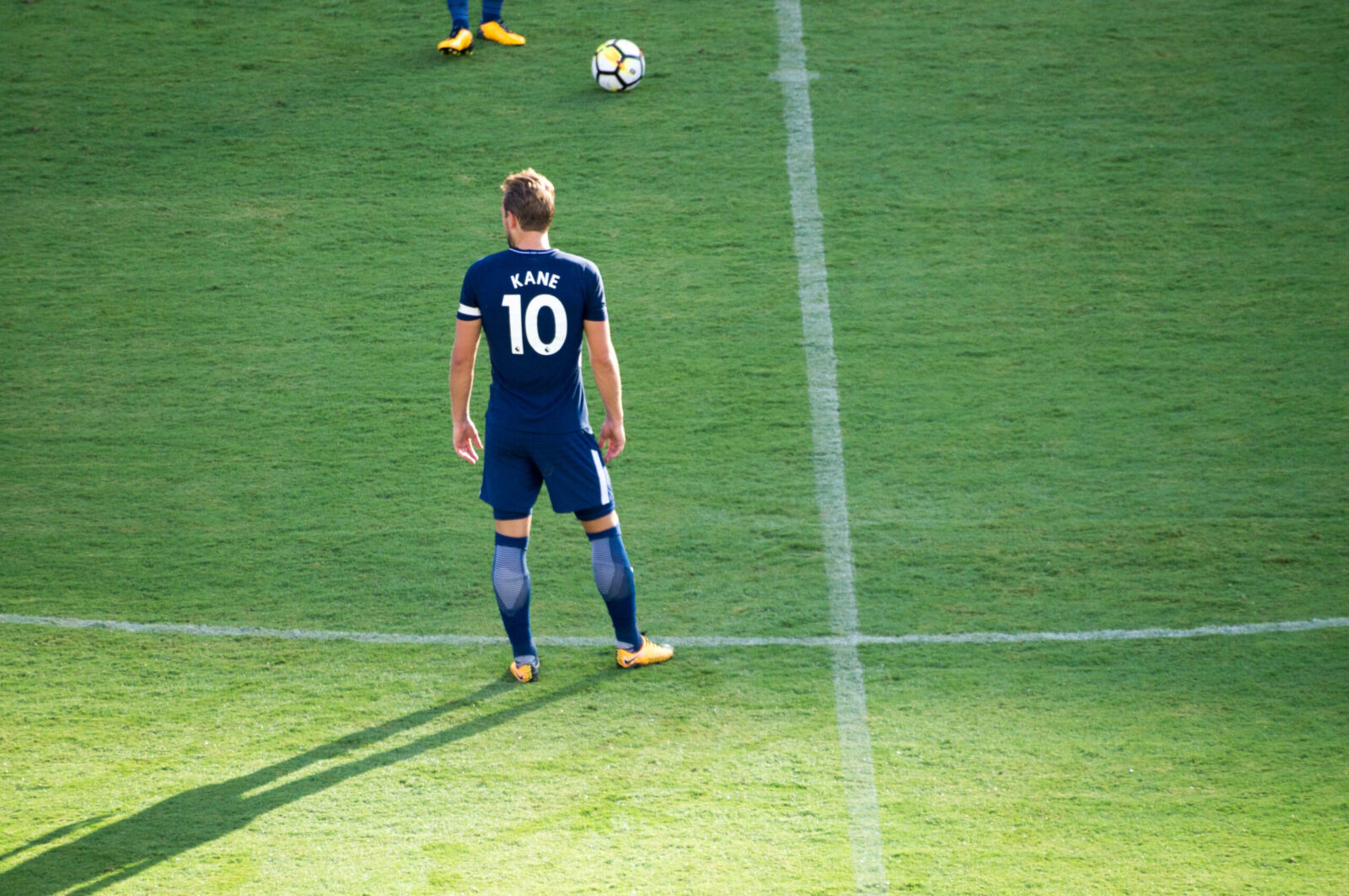
Every few windows there’s a transfer rumor so wild it makes us double-take. “Harry Kane to Barcelona” is that headline right now. On paper, it’s a mash‑up of elite No. 9s from parallel universes: England’s captain in blaugrana, sharing a front line, or at least a dressing room, with Robert Lewandowski. It sounds outlandish, but where there’s smoke, there’s usually someone holding a match. Let’s unpack what’s actually being reported, whether the numbers and rules would allow it, and, crucially, if Kane and Lewandowski could coexist without stepping on each other’s finishing boots.
Where The Rumor Came From And What’s Actually Being Reported
Primary Sources And Credibility
This story didn’t spring from thin air or a fan forum. It’s been floated by a mix of continental outlets and well-connected transfer columnists who’ve framed it less as “deal imminent” and more as “Barça are exploring the feasibility.” The temperature is warm, not boiling. We’ve seen the usual domino narrative: Barcelona’s need for firepower and star wattage, Kane’s proven output in Germany, and the club’s history of pushing boundaries in the market.
Still, the signal-to-noise ratio matters. The most credible threads cite that Barcelona’s recruitment department has modeled striker options for both the present and the post-Lewandowski era, with Kane surfacing as a scenario-planning name rather than an active negotiation. On the Bayern side, briefings stress Kane’s importance and lack of any release clause that would make this easy. In short, this is a concept that’s being tested in the media and behind closed doors, far from a sealed plan.
What Barcelona, Bayern, And Kane Reportedly Want
From Barcelona’s perspective, the logic is obvious: secure a guaranteed goalscorer who also elevates combination play, and buy time to blood their next generation. Bayern reportedly want to keep Kane: he’s a foundational piece in their title push and Champions League ambitions, and they invested heavily to get him. As for the player, Kane has consistently prioritized trophies while maintaining family stability. He moved abroad for Bayern to chase the biggest honors and has thrived. Any pivot to LaLiga would have to promise a realistic shot at titles, a competitive wage package, and a footballing project that makes sense in his early‑30s window.
Contract And Financial Reality Check
Kane’s Bayern Deal: Length, Clauses, And Valuation
Kane signed for Bayern in 2023 on a long-term contract running through 2027. There’s no credible reporting of a fixed-price release clause. Valuation-wise, we’re talking about a player still delivering elite output and leadership, but also entering his mid-30s curve during the contract. That duality lands him in the €80–100 million conversation for a near-term transfer, with a high salary that reflects his status. Bayern, historically, don’t cave on cornerstone assets unless the numbers are irresistible and the replacement path is clear.
LaLiga Spending Limits, Wages, And Registration Rules
Here’s the tough bit for Barcelona. LaLiga’s spending control system caps squad cost based on revenues and approved budgets. If a club is operating above its threshold, new signings can only be registered under constrained formulas, often translating to needing significant salary exits or fresh income to unlock the 1:1 rule. Barcelona have been working to rebalance their wage bill and amortization profile for several windows. Adding Kane, transfer fee plus top-of-market wages, would require either major departures, deferred structures, or creative mechanisms vetted by LaLiga. The compliance hurdle is not hypothetical: it’s the single biggest check on the rumor’s realism.
Non-EU Spots And Squad Registration Constraints
Since Brexit, English players count as non‑EU in Spain. LaLiga allows only three non‑EU registrations. Barcelona often ride the limit, juggling passports and timing. To bring Kane in, a non‑EU slot must be free at the point of registration. That could be manageable if someone secures an EU passport or leaves, but it’s another moving piece that has to align with the financial puzzle.
Tactical Fit: Can Kane And Lewandowski Play Together?
Double No. 9, 4-4-2 Diamond, Or Staggered 9/10 Roles
On paper, Kane and Lewandowski can coexist because Kane isn’t just a finisher: he’s a playmaking 9. We’ve seen him drop into 10 spaces to thread runners, which suggests a staggered setup where Lewandowski pins the back line and Kane drifts between lines could work. A 4‑4‑2 diamond would give both centrality, with interiors and a roaming 10 feeding them. Alternatively, a 4‑2‑3‑1 with Kane as the nominal 10, really a 9/10 hybrid, behind Lewandowski could create overloads and cutback schemes.
But there’s a tradeoff. Two central strikers can flatten the width unless the fullbacks and wingers provide constant amplitude. Barcelona’s best recent stretches leaned on wide play from the right, hello, Lamine Yamal, and underlaps from midfield. Any two‑9 blueprint must preserve that.
Pressing, Defensive Workload, And Transition Risks
The bigger tactical question is off the ball. Neither Kane nor Lewandowski is a high-torque presser at this stage. Asking both to lead an aggressive high press risks creating a broken block. The compromise is to press in waves, with midfielders stepping up and the front duo screening passes rather than chasing. That demands supreme compactness and discipline from the back six. In transition, Barcelona would have to accept fewer ball recoveries upfield and focus on controlling rest defense, pinching fullbacks, a vigilant pivot, and center-backs ready to kill counters early.
Impact On Wingers, Creators, And Set-Piece Threats
If you play two central scorers, the wingers become either width merchants or interior runners. Someone like Yamal benefits from Kane’s passing angles: he’ll receive earlier switches and cutback lanes. Creators in midfield would need to embrace off-ball sprints beyond the strikers to prevent congestion. On set pieces, the upside is huge. Between Kane, Lewandowski, and the center-backs, Barcelona would suddenly be one of Europe’s most intimidating dead-ball teams, turning corners and free kicks into a reliable source of goals.
Motivations On Both Sides
Why Barcelona Might Push: Short-Term Titles vs. Long-Term Succession
Barcelona are balancing two timelines. The short-term one says: add guaranteed end product, chase LaLiga and make a Champions League dent now. The long-term one says: bridge from Lewandowski to the next era without a scoring cliff. Kane could straddle both, offering two elite seasons while younger attackers develop. There’s also the brand dimension. Signing a global star moves attention, sponsors, and matchday buzz. We shouldn’t pretend that doesn’t count in Barcelona’s calculus.
Why Kane Might Consider Or Decline: Legacy, Trophies, And Lifestyle
Kane’s decision tree is narrower than it seems. He left England to win the biggest trophies and he’s been prolific in Germany. Would a switch to Spain increase his Champions League odds or simply change the scenery? Barcelona’s pitch would revolve around being the missing piece in a storied shirt, and life in Barcelona doesn’t hurt. But there are reasons to hesitate: upheaval for his family, a league adaptation curve, and the risk of joining at a financially delicate moment. If Bayern are competitive on all fronts and he’s adored, the status quo has a lot going for it.
Pathways And Obstacles To Any Deal
Fee Structures: Straight Cash, Add-Ons, Or Player Swaps
If this moved past the rumor mill, structure would be everything. A straight cash bid near €90–100 million tests Bayern’s resolve but strains Barcelona’s books. Add-ons linked to titles or appearances lower the upfront pain but still count in LaLiga’s projections. Player swaps could ease fee pressure, yet Bayern typically prefer clean transactions unless the incoming profile clearly fits their XI. Wages would likely require staged increases or partial deferrals within league rules to land under the cap.
Timing Scenarios: January Move, Summer Window, Or Pre-Agreements
January is a non-starter unless something dramatic changes, LaLiga registration, Bayern’s season context, and the complexity of a mega transfer argue against it. The summer window is the only realistic lane, giving Barcelona time to orchestrate exits and Bayern time to plan replacements. A pre-agreement could surface if the clubs find common ground early, but with Kane under contract through 2027, there’s no free leverage point on the horizon.
Bayern’s Stance, Dressing Room Politics, And Replacement Plan
Bayern’s stance would likely be firm: Kane is central, not for sale. If the player were to push, there’s no sign of that, Bayern would still need a replacement worthy of a title run. That immediately narrows the market to a handful of expensive names, each with their own negotiation labyrinth. Politics matters too. Bayern’s dressing room is built on clarity and standards: selling the captain of England after one or two standout seasons would need airtight justification. Conversely, Barcelona would have to manage Lewandowski’s role and ego with care if another alpha striker arrives. The human side can’t be hand-waved.
If It Happened: Likely Lineups And Ripple Effects
Sample Lineups, Rotation Patterns, And Role Adjustments
Picture a big-game setup where Barcelona use a 4‑2‑3‑1 that morphs into a 4‑4‑2 without the ball. Lewandowski leads the line, Kane operates as a connective 9/10, and the right winger stays high and wide to stretch. The left side tilts more conservatively, with the fullback choosing moments to overlap while an interior midfielder arrives late into the box. In certain matches, a diamond could appear: Kane at the tip behind Lewandowski, two energetic eights covering width, and a single pivot anchoring transitions. Against deep blocks, Kane’s ability to drop and spin early diagonals unlocks the far-side winger: against high lines, he can slip Lewandowski through with first-time passes.
Rotation would be pragmatic. There would be nights when Kane starts centrally and Lewandowski rests, preserving legs and clarity. Other nights the roles flip, or both play 60 minutes together before the bench injects pace. The trick is setting expectations that the partnership is a tool, not a rigid default.
Knock-On Effects For Emerging Forwards And Squad Balance
A signing like this compresses minutes for emerging strikers and inside forwards. The club would need a clear plan for development, targeted loans, cup starts, and late-game cameos that actually fit the player’s profile. It also nudges the squad toward a heavier central spine. To keep balance, Barcelona would prioritize at least one high-octane winger who thrives in isolation, plus midfielders comfortable covering vast spaces during rest defense. Set pieces become a strategic lever rather than an afterthought, turning tight domestic games into point-harvesting opportunities.
Conclusion
So, Harry Kane to Barcelona? It’s a fascinating thought experiment that, right now, feels more like scenario planning than a live negotiation. The footballing fit has real merit if managed intelligently: Kane’s connective play could complement Lewandowski’s penalty-box mastery in certain game states. But the financial architecture, LaLiga’s registration rules, and Bayern’s understandable reluctance are towering obstacles.
If the pieces ever aligned, non‑EU slot freed, wage bill trimmed, Bayern softening with a viable replacement lined up, we could see talks move from whispers to something tangible in a summer window. Until then, we treat it for what it is: a compelling rumor with enough logic to discuss, but not enough green lights to predict. And we’ll admit it, there’s a part of us that’s curious to see two of the era’s deadliest finishers in the same shirt, swapping roles and goals under the Camp Nou lights.
No responses yet