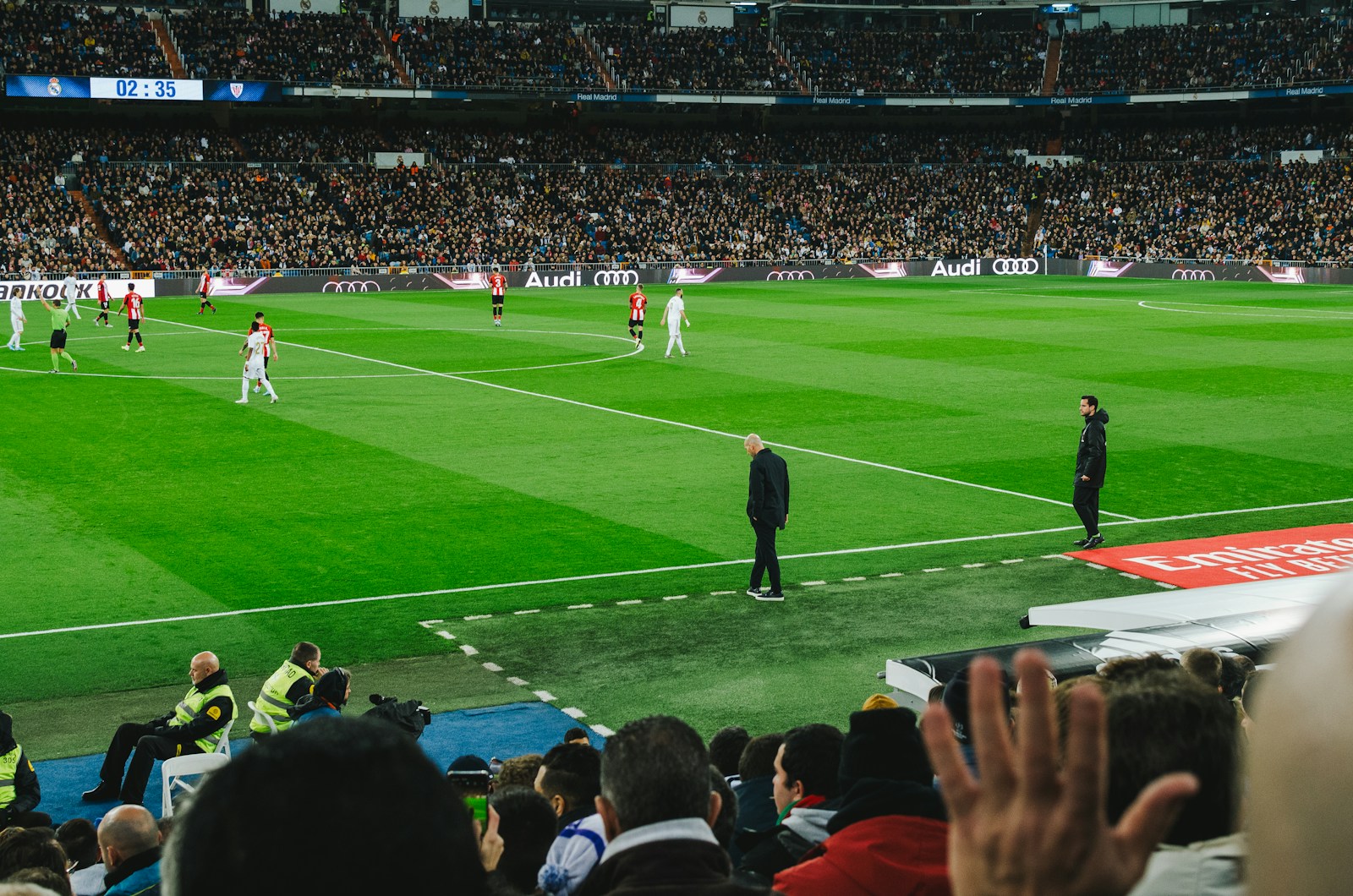
We came in expecting a statement win and instead got a tactical stalemate. In this tactical breakdown of how Xabi Alonso’s Real Madrid were held 0-0 by Rayo Vallecano, and why Kylian Mbappé was effectively invisible, we’ll unpack the structures, the pressing traps, and the small positional details that froze Madrid’s rhythm. This wasn’t a smash-and-grab. It was a controlled defensive performance from Rayo layered over Real’s own build-up issues. The target keyword here matters because this game is a case study: how a compact mid-block can blunt elite talent when spacing, tempo, and support runs aren’t right.
Match Context And Setup
Lineups, Roles, And Initial Shapes
We set up in a 4-2-3-1 that often looked like a 2-3-5 in possession. The double pivot anchored circulation, fullbacks stepped infield at times, and the front five staggered across the last line. Mbappé started nominally off the left but with license to attack the half-space. The 10 floated between lines, trying to connect the pivots to the wingers.
Rayo answered with a disciplined 4-4-2 that tilted into a 4-5-1 without the ball. The near-side winger dropped to track our fullback, the far-side tucked in to pinch lanes, and the second striker toggled between screening the pivot and pressing the ball-side center back. It wasn’t deep bunkerball: it was a stable mid-block with selective jumps.
Game-State And Venue Factors
The venue and game-state added friction. Once we didn’t score early, Rayo’s plan gained credibility and patience. The crowd urged faster play, which pushed us toward rushed switches and optimistic crosses rather than the third-man combinations Alonso typically wants. A measured tempo was needed: urgency without structure played into Rayo’s hands.
Rayo Vallecano’s Defensive Plan
Compact 4-4-2/4-5-1 Mid-Block To Deny Central Progression
Rayo’s first win condition was vertical compression. The lines were tight, about 10–12 yards between midfield and defense, and the forwards curved their runs to shade our pivots. We could get to the halfway line but not through it at speed. With interiors marked outside-in, our 10 received with his back to goal and a defender and midfielder closing. Every central reception felt crowded, so we drifted wide, exactly where Rayo wanted us.
Touchline Pressing Traps And Backward Press On Pivot
Whenever the ball went to our fullback, Rayo sprung a touchline trap. The winger pressed, the fullback stepped high to block the inside lane, and the near-side 8 slid over to cut the wall pass. If we bounced it back to the pivot, Rayo’s second striker arrived on his blind side with a backward press, nicking touches and forcing rushed releases. This is where our structure wobbled: too many flat angles, not enough third-man support to break the trap.
Fullback Positioning To Control Mbappé’s Channels
They respected Mbappé’s speed without overcommitting. The left center back tracked him only when he entered the half-space: otherwise the fullback held a slightly deeper, narrower starting spot to block inside-out runs. When Kylian went wide, the wide midfielder doubled and showed him the line. When he came inside, the ball-near 6 and center back staggered to deny the wall pass into the 10. That two-layer net blunted his trademark burst without gifting space behind.
Real Madrid’s Build-Up And Final-Third Issues
Double Pivot Isolation And Slow Ball Circulation
Our double pivot got isolated. With Rayo’s front two screening and curving, the pivots received square and under pressure. Instead of one-touch bounce passes to a free interior, we often needed an extra touch to set the body, slowing circulation. The center backs hesitated to split the first line with lasers, so we defaulted to safe switches. By the time the ball reached the far side, Rayo’s compactness had shifted across intact.
Lack Of Interior Occupation Between Lines
We underloaded the zone that mattered most: the interior pocket between Rayo’s midfield and defense. Our 10 often dropped onto the same line as the pivots to help progression, which hollowed out the central lane near the box. The wingers stayed pinned on the chalk to maintain width, but without a constant half-space presence, we couldn’t create the simple wall-pass triangles that open mid-blocks. On the few occasions an interior did pop into the pocket, the timing with the ball-carrier was off, late pass, touch under pressure, turnover.
Crossing Without Presence And Poor Rest Defense
When patterns stalled, we crossed. But we crossed without bodies. With Mbappé starting wide and the far winger not attacking the back post aggressively, we threw in hopeful deliveries against set defenders. Worse, our rest defense wasn’t layered enough behind possession: both fullbacks pushed simultaneously at times, leaving big gaps for Rayo’s first pass after regain. We weren’t punished, but those moments dissuaded us from committing extra runners, which further thinned our box presence.
Why Mbappé Was Invisible
Body Orientation, Starting Positions, And Timing Of Runs
Mbappé’s threat is built on posture and timing. Here, his body orientation often faced the touchline when receiving, making him easier to shepherd outside. Starting too close to the chalk also detached him from the 10. When he inverted late, Rayo’s back line had already set. The few times he ran inside early, the delivery lagged: when the pass was early, his run was late. That de-sync turned killer channels into crowded alleys.
Limited Support Runs And Underlaps From Fullbacks
He needed underlaps and third-man darts to disorganize Rayo’s fullback-center back pairing. Our fullback support arrived sporadically. Without a consistent underlap to pin the near center back, Mbappé faced 1v2 scenarios. The interior midfielder on his side also didn’t sprint beyond the ball enough to threaten the blind shoulder. So Kylian either tried to beat two or recycled to the pivot, which fed the tempo Rayo wanted.
Rayo’s Staggered Coverage And Denial Of Inside-Out Combos
Rayo’s staggering was textbook. The wide midfielder engaged at an angle to block the inward dribble: the fullback stayed half-a-step deeper to take away the slip pass: the near 6 hovered a few yards inside to jump the wall pass into the 10. That triangle muted Madrid’s favorite inside-out combo: Mbappé receive → bounce to 10 → through-ball into the inside channel. Without that, his touches drifted toward low-value zones, and his shots never materialized.
Adjustments, Substitutions, And Missed Opportunities
Alonso’s Rotations And Attempts To Overload Half-Spaces
We saw purposeful tweaks. Alonso rotated the front three, flipping the wingers for a spell to get Mbappé closer to the right-sided 8 for diagonal one-twos. The 10 also started staggering wider to form a triangle on the left. For a few minutes, that created the minimum viable chaos, Rayo’s 6 got pulled laterally, and passing windows opened. A late substitution introduced a more direct runner between center backs, which briefly pinned the line and freed second balls.
Moments That Nearly Broke The Block
There were near-misses. One third-man action from the left center back into the 10, laid off to the underlapping fullback, produced the kind of cutback chance we’d scripted. Another quick double wall pass on the right carved out a lane for a low cross across the six-yard box. The issue wasn’t the ideas: it was repeating them enough to fatigue the block. Each promising sequence was isolated rather than the start of a sustained wave.
What A More Direct Plan Could Have Looked Like
In hindsight, a bolder direct plan might’ve tilted the odds: earlier verticals from the center backs into the 10’s feet: more immediate opposite-side runs from the far winger to attack flick-ons: deliberate use of Mbappé as a central runner for 10–15 minutes to pin both center backs: and scripted underlaps every other possession to drag Rayo’s shape. Even five minutes of relentless depth running and second-ball traps high could’ve broken the mid-block’s comfort.
Data Snapshot And Film Notes
Shot Quality, PPDA, And Field Tilt
The tape matches the numbers we’d expect from a 0-0 like this. We generated volume without premium value, several shots from poor angles, few clear 1v1s. Rayo’s PPDA sat higher than in a low block because they pressed selectively in the mid-zone, but our passes per defensive action in their half still suggested we spent more time camped in their territory than truly slicing them open. Field tilt favored us, yet our expected goals plateaued due to blocked lanes and late arrivals in the box.
Heat Maps And Pass Networks
Our heat would show a red smear on both flanks, cooler in the central pocket at the top of the box, classic sign of wing-recycling without penetration. Pass networks likely reveal thick connections between center backs and fullbacks, thinner lines into the 10, and limited diagonals arriving on Mbappé’s inside shoulder. Rayo’s map would cluster around the middle third with a few sharp counter lanes wide. On film, the pattern is consistent: tidy build-up to the sides, then a stall, then a recycle.
Conclusion
Rayo didn’t “park the bus”, they parked the lanes. Their compact 4-4-2/4-5-1 mid-block, touchline traps, and staggered coverage over Mbappé met a Real Madrid display that lacked interior occupation, tempo, and synchronized support runs. That’s how Xabi Alonso’s Real Madrid were held 0-0 by Rayo Vallecano, and why Mbappé was invisible. The fix isn’t mysterious: earlier verticals, hard underlaps, and a spell using Kylian as a central pin. Next time, we need to stress the block before it settles, not after it’s comfortable.
No responses yet